It has been tough sledding for a man attempting to convince the powers-that-be to come on board and support the use of Neighbourhood Zero Emission Vehicles.
Dave Haberman has been lobbying municipal governments, including the Municipality of North Cowichan, to pass a bylaw that would permit the use of the small, electric vehicles in their communities.
After several years of pitching the concept, the response has been mostly discouraging but Haberman, well-known in Chemainus as the developer of several residential projects, isn’t someone to give up easily.
“Yesterday, a sitting MLA sat across from me and said ‘yes’, Haberman says.
Debra Toporowski represents Cowichan Valley in the British Columbia legislature, and before that served as a councillor for North Cowichan and for Cowichan Tribes.
“When she told me the Neighbourhood Zero Emission Vehicle pilot (program) is exactly the kind of project where the Province, First Nations, and the local economy can all win at once, it meant something, because she’s one of the few people who can get the wheels of government moving for us.”
A Neighbourhood Zero Emission Vehicle travels on four wheels and is powered by an electric motor that is designed to allow the vehicle to attain a speed of 32 kilometres per hour but not more than 40 kilometres per hour in a distance of 1.6 km on a paved level surface.
Haberman says there are 21 municipalities in BC, including eight on Vancouver Island, that have adopted a bylaw permitting use of the vehicles. Bylaw 24.06 of the BC Motor Vehicle Act requires that the vehicles meet the standards of the Motor Vehicle Safety Act (Canada) for a low-speed vehicle and if imported to Canada, have been imported as an admissible low-speed vehicle in accordance with the Motor Vehicle Safety Act (Canada) requirements.
The bylaw also states that no person shall drive or operate a neighbourhood zero emission vehicle on a street unless the street has a speed limit of 50 kilometres per hour or less and the person drives or operates the neighbourhood zero emission vehicle in the lane on the street closest to the right-hand curb or shoulder, except to make a left hand turn or to pass another vehicle.
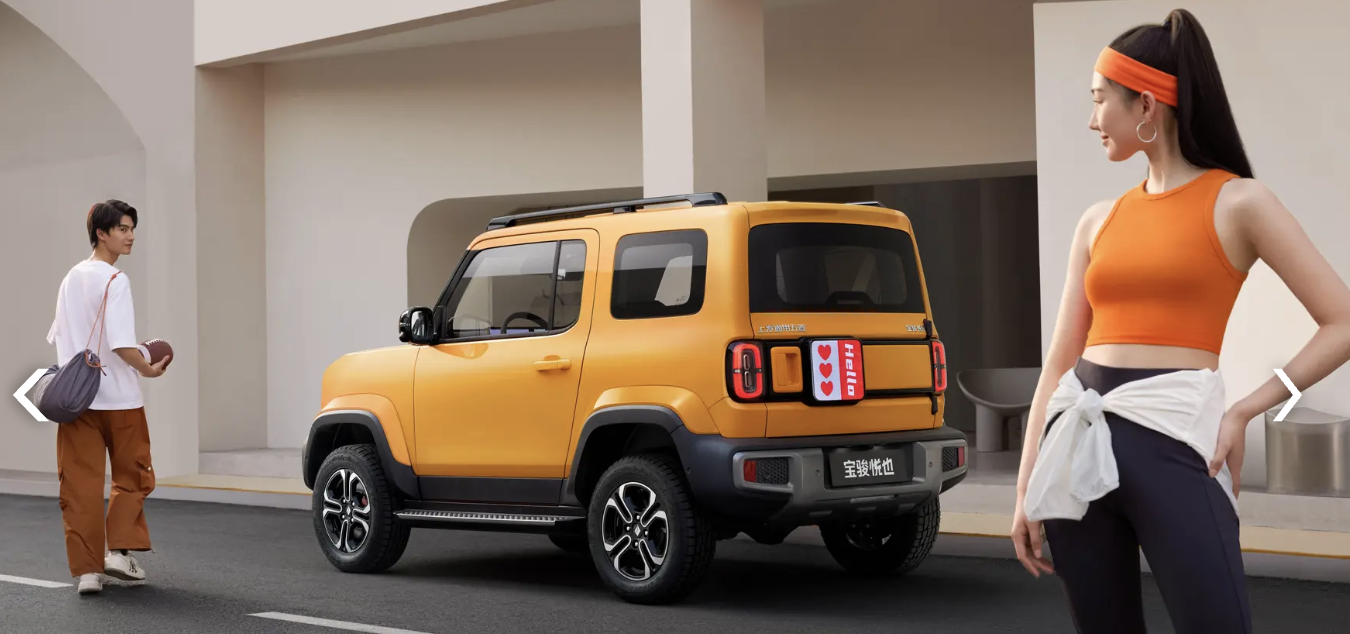
Haberman has found several vehicles that appear to be ideal for use in British Columbia, including the Baojun Yep, a three-door, four-seat electric mini-SUV that is manufactured in China. It would sell for approximately $12,000 in Canada.
“Compact, efficient vehicles like these are what Vancouver Island drivers could be driving tomorrow, once the regulatory door is opened,” Haberman says.
“Some of the most successful EVs in the world are actually tiny, affordable runabouts. The SGMW Wuling Mini has sold 1.9 million since launch and ranked as the planet’s fourth best-selling EV last year.
“Here in Canada, this NEV could land for around $10,000 and cost just three cents per kilometre to run. But without a provincial NZEV pilot program to drive demand, manufacturers will continue bypassing Canada.”
Haberman says there are some positive signs happening and he hopes to build on that momentum.
“I’m in conversation with select First Nations in supporting this pilot program and we have a trip to China in the works to meet with qualifying manufacturers,” he says.
Haberman has plans to take to the road to spread the message that Neighbourhood Zero Emission Vehicles represent a great opportunity.
“In the coming weeks, our BYD truck will be visiting select municipalities and First Nations communities across Vancouver Island and the Gulf Islands to discuss how best to bring our NZEV pilot program to their region.”
Haberman’s company, EV Island, coordinates, executes, and manages Neighbourhood Zero Emission Vehicle Pilots for municipalities and First Nations that chose to participate. EV Island does not sell vehicles.
For more details visit nzevpilot.ca