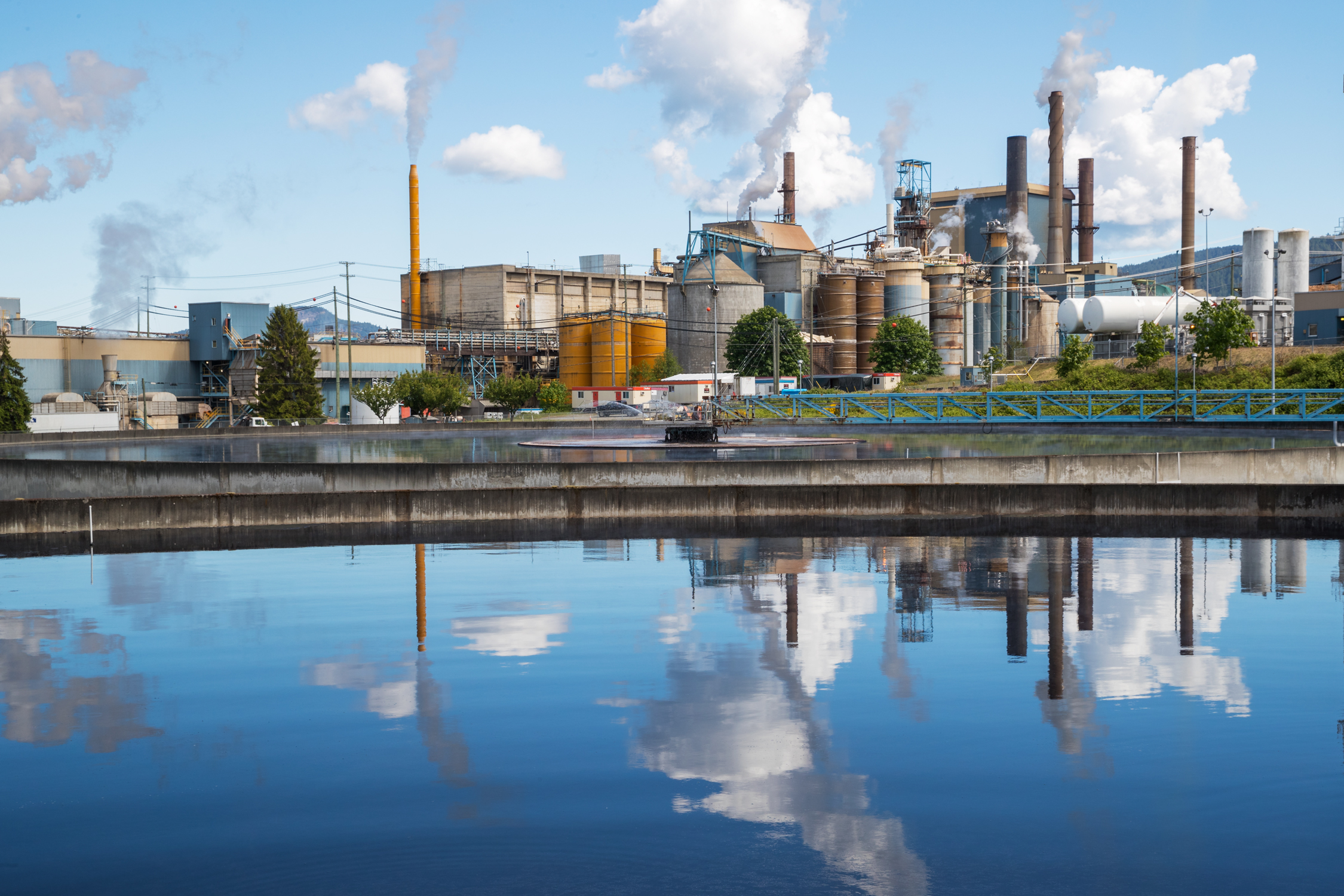
The closure of the Crofton mill and the loss of 350 jobs is devastating news for employees and their families, as well as for numerous local businesses in the Cowichan Valley that provide goods and services to the mill.
“The Crofton mill has been challenged for some time now,” said Steve Henry, Domtar paper and packaging president. “Over the last 18 months, Crofton employees worked hard to reduce operational costs and they made some extraordinary gains.
“Unfortunately, continued poor pricing for pulp and lack of access to affordable fiber in BC necessitates the closure.”
However, the news that operations will cease entirely early in the new year, should not be considered a surprise.
Market conditions have deteriorated in recent years, and the Crofton operation has been downsizing throughout the last two decades. A former employee of the mill says when he began working in Crofton there were 1,400 employees. That number has dropped by 75 per cent.
Newsprint, once a major commodity that was shipped around the world, is no longer being produced at the mill and hasn’t been for several years.
Today, the mill produces pulp that is shipped to mills that produce toilet paper, writing paper and other paper products.
With the Domtar-owned business paying approximately 15 per cent of the taxes collected by the Municipality of North Cowichan, there is legitimate concern about what the eventual loss of that revenue will mean for residential property owners, commercial property taxpayers and light industrial property owners.
Former North Cowichan mayor Al Siebring, writing on social media, pointed out that North Cowichan has been preparing for this day for more than two decades.

“The fact is that when it comes to the Crofton mill specifically, past Councils did plan ahead,” Siebring points out.
“Twenty-five years ago, in 2000, the heavy industry class (which is comprised primarily of the Crofton Mill, but also included the much smaller mills in Chemainus and Cowichan Bay), were carrying around 62 per cent of the entire municipal tax load.
“North Cowichan could brag that it had among the lowest residential property taxes in the entire province and we did. But that was because more than 60 cents of every dollar we collected came from those mills.”
Siebring says the council of the day, under the leadership of mayor Anne Murray, recognized that this was a risky situation.
“If the mills, particularly Crofton, were to shut down, the muni would lose more than half of its tax revenue in a single blow,” Siebring explains.
The process of shifting the tax burden away from large industrial taxpayers and onto the residential taxpayers began. Siebring says the largest and final shift was done in 2012 when residential taxpayers were hit with a double-digit tax increase.
“I voted against that 2012 increase, preferring that we spread it out over two years, but Council decided to bite the bullet and get it done that year.
North Cowichan mayor Rob Douglas says the mill closure is going to be tough on local families and businesses.
“This is devastating news for local workers, their families and many businesses that rely on the Crofton mill. These are folks with families to support and mortgages to pay. This site has been a significant part of North Cowichan’s economy for generations, benefitting many families including my own,” said Douglas.
“We will do everything we can to support the community through this difficult time.”
In a news release, Douglas says the mill that was built in 1956 has long been a major employer and taxpayer in North Cowichan and the broader Cowichan region. Its closure will have a profound effect on the community, including the loss of high-paying jobs, tax revenue that supports core services, and wider economic spinoffs.
Currently Domtar is North Cowichan’s single largest taxpayer, contributing approximately $5 million annually in property taxes.
Douglas will be meeting with Premier David Eby, Forests Minister Ravi Parmar and Labour Minister Jennifer Whiteside, and leadership from the Public and Private Workers of Canada – which represents the Crofton mill workers – today to discuss next steps.
Domtar, formerly known as Paper Excellence, is owned by Indonesian investor Jackson Wijaya. The company has a workforce of nearly 14,000 employees in more than 60 locations across North America.